
In today’s fast-growing digital finance ecosystem, online money exchange platforms have become a core part of global transactions. Businesses and individuals now demand instant, secure, and automated currency exchange systems that work across fiat and cryptocurrency networks without friction. A professional Money Exchanger Script is the backbone of such platforms, enabling users to convert currencies automatically or semi-automatically while maintaining security, transparency, and operational efficiency.
Platforms like roboexchanger.com demonstrate how a modern exchanger system can support multiple currencies, payment gateways, and automation models within a single powerful infrastructure. However, building a reliable money exchanger system is not just about coding; it requires deep planning, compliance awareness, security architecture, performance optimization, and SEO-ready scalability. This complete guide is designed to walk you through every critical aspect of building a secure money exchanger script from the ground up.
Whether you are an entrepreneur, fintech startup, or digital exchange operator, these twelve detailed points will help you understand how professional money exchanger software works, why automation matters, and how to future-proof your platform for long-term success. Each section explores one essential component in depth, focusing on real-world functionality, user trust, and system reliability. If your goal is to launch or scale an exchange platform that ranks well on Google and earns user confidence, this guide will serve as a practical and strategic foundation.
Complete 12-Point guide to building a secure Money Exchanger Script
1. Understanding the Core Architecture of a Money Exchanger Script
A secure money exchanger script begins with a strong and well-planned system architecture that defines how all components communicate and function together. At its core, a money exchanger system consists of a user interface, an exchange engine, an admin control panel, and integrations with payment gateways and currency APIs. The architecture must support both automatic and semi-automatic exchange flows, allowing transactions to be processed instantly or manually reviewed when required.
A scalable architecture ensures that as transaction volume grows, the system remains fast and stable without performance degradation. Modern exchanger scripts often use modular architecture, which allows developers to add or remove features without affecting the entire system. This approach improves maintainability and long-term flexibility. Database design also plays a critical role, as the system must securely store user data, transaction history, exchange rates, and logs.
Proper indexing and optimized queries are essential for fast processing. Security layers should be embedded directly into the architecture rather than added later, including encryption, role-based access control, and secure API communication. A professionally designed money exchanger script architecture ensures smooth automation, accurate rate calculations, and seamless user experience.
Without a solid foundation, even the most feature-rich exchange platform can fail under real-world conditions. Therefore, understanding and planning the core architecture is the first and most important step in building a reliable and secure money exchanger software that can compete in today’s fintech market.
2. Automatic and Semi-Automatic Exchange Workflow Design
One of the defining features of a professional money exchanger script is its ability to support both automatic and semi-automatic exchange workflows. Automatic exchange allows transactions to be completed instantly without human intervention by integrating APIs from payment gateways, crypto wallets, and banking systems. This model is ideal for high-volume platforms that prioritize speed and user convenience. Semi-automatic exchange, on the other hand, introduces a manual approval step where the admin verifies payments before releasing funds.
This approach is commonly used for high-risk currencies, large transaction amounts, or less reliable payment methods. Designing a flexible workflow that supports both models ensures operational control while maintaining efficiency. The system should allow admins to configure which currencies or gateways operate automatically and which require manual review. Notification systems play a key role in this workflow by alerting admins and users about transaction status changes.
Automated status updates, email confirmations, and dashboard alerts improve transparency and trust. Error handling is also critical; if an automatic transaction fails, the system should instantly switch to a manual review process. A well-designed workflow reduces disputes, minimizes processing delays, and protects the platform from fraud. By balancing automation with human oversight, a money exchanger script can deliver fast service without compromising security or accuracy. This hybrid workflow design is a major reason why modern exchange platforms continue to scale successfully.
3. Multi-Currency and Payment Gateway Integration
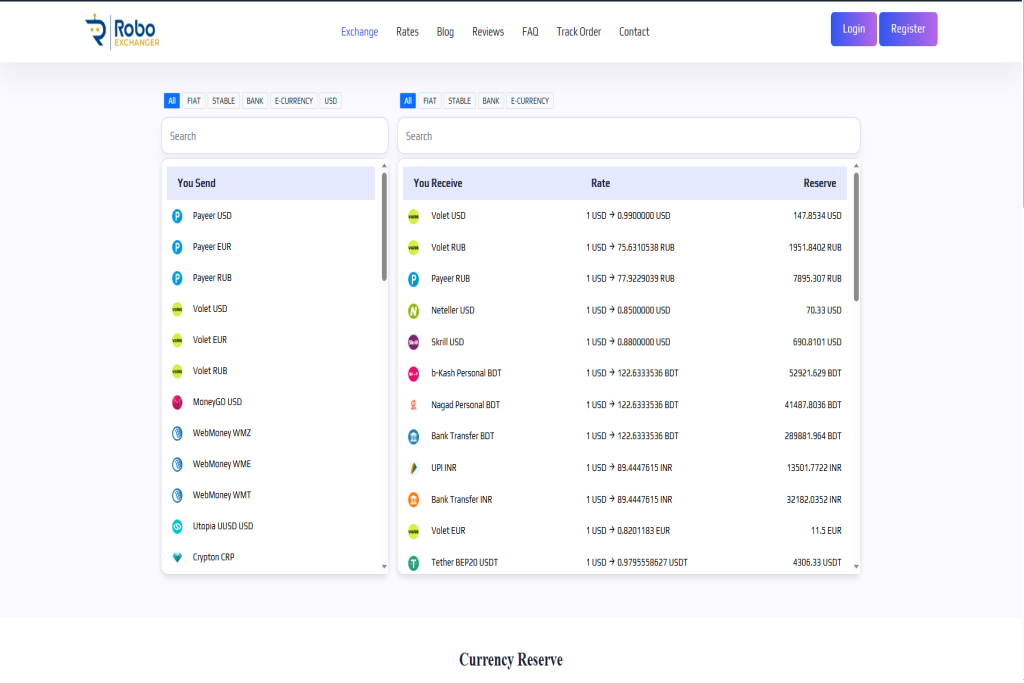
A successful money exchanger platform must support a wide range of currencies and payment methods to meet global user demands. This includes fiat currencies like USD, EUR, and GBP, as well as cryptocurrencies such as Bitcoin, Ethereum, and stablecoins. Integration with multiple payment gateways allows users to deposit and withdraw funds using their preferred methods, including bank transfers, e-wallets, and crypto wallets. Each integration requires secure API communication, proper error handling, and real-time status updates.
A professional money exchanger script should be designed to easily add or remove currencies without major code changes. Dynamic rate fetching from trusted sources ensures accurate conversions and prevents pricing manipulation. Gateway redundancy is another important consideration; if one payment provider experiences downtime, the system should seamlessly route transactions through alternative options. Currency-specific rules, such as minimum limits, fees, and processing times, should be configurable from the admin panel.
This flexibility allows platform owners to adapt quickly to market changes and regulatory requirements. Supporting multiple currencies and gateways not only increases user reach but also improves platform credibility. Users are more likely to trust and return to a system that offers convenience, transparency, and reliability. Therefore, robust multi-currency and gateway integration is a cornerstone of any high-quality money exchanger script aiming for long-term success.
Automatic & Semi-Automatic Money Exchanger Software (50% OFF)
4. Security Mechanisms and Fraud Prevention Systems
Security is the most critical aspect of any money exchanger script, as financial platforms are prime targets for cyberattacks and fraud. A secure exchanger system must implement multiple layers of protection to safeguard user data, funds, and system integrity. Encryption should be used for all sensitive data, including passwords, API keys, and transaction details. Secure authentication methods such as two-factor authentication add an extra layer of defense against unauthorized access.
Fraud prevention mechanisms, including IP tracking, device fingerprinting, and transaction behavior analysis, help detect suspicious activity before it causes damage. Rate limiting and firewall protection prevent brute-force attacks and system abuse. The admin panel should include role-based access control, ensuring that only authorized personnel can perform sensitive actions. Regular security audits and vulnerability testing are essential to identify and fix potential weaknesses.
Logging and monitoring systems provide real-time insights into platform activity, allowing quick response to threats. A secure money exchanger script not only protects assets but also builds user trust, which is vital for growth. Without strong security measures, even a feature-rich platform can lose credibility overnight. Investing in robust security from the beginning is not optional; it is a fundamental requirement for operating a professional exchange system in today’s digital finance landscape.
5. Admin Control Panel and System Management
The admin control panel is the command center of a money exchanger script, providing complete control over platform operations. A well-designed admin panel allows administrators to manage users, transactions, currencies, exchange rates, and payment gateways from a single interface. Real-time dashboards displaying transaction volume, pending exchanges, and system health help admins make informed decisions quickly. Manual approval tools are essential for semi-automatic exchanges, enabling admins to verify payments and release funds securely.
Configuration options should allow easy adjustment of fees, limits, and automation rules without technical expertise. User management features such as account suspension, verification approval, and activity monitoring help maintain platform integrity. Detailed transaction logs and reporting tools support accounting, auditing, and dispute resolution. The admin panel should be intuitive, responsive, and protected with strong authentication.
A powerful management system reduces operational complexity and minimizes human error. When administrators can efficiently oversee the platform, the entire exchange process becomes smoother and more reliable. A professional admin panel is not just a convenience; it is a necessity for running a scalable and secure money exchanger business.
6. User Experience and Interface Optimization
User experience plays a crucial role in the success of a money exchanger platform. Even the most secure and feature-rich script can fail if users find it confusing or difficult to use. A clean, intuitive interface helps users complete exchanges quickly and confidently. Clear instructions, transparent fees, money exchanger script and real-time status updates reduce uncertainty and support trust. Mobile responsiveness is essential, as many users access exchange platforms from smartphones.
Fast loading times and optimized performance improve user satisfaction and reduce bounce rates. A well-structured dashboard allows users to track transaction history, balances, and exchange status easily. Error messages should be clear and helpful, guiding users toward resolution instead of causing frustration.
Localization options, such as language and currency preferences, expand global accessibility. User experience optimization directly impacts conversion rates and repeat usage. By prioritizing simplicity and clarity, a money exchanger script can attract and retain users in a competitive market. A user-centric design approach ensures long-term engagement and platform growth.

Complete 12-Point guide to building a secure Money Exchanger Script
7. Exchange Rate Management and Fee Configuration
Accurate exchange rate management is vital for maintaining profitability and user trust. A professional money exchanger script should fetch live rates from reliable sources while allowing admins to apply custom margins. This flexibility ensures competitive pricing while covering operational costs. Rate updates should occur automatically at configurable intervals to reflect market changes. Fee structures must be transparent and adjustable, including fixed fees, percentage-based charges, or currency-specific costs.
Admins should be able to define different fees for automatic and semi-automatic exchanges. Clear fee breakdowns displayed to users prevent disputes and improve transparency. Historical rate tracking and reporting tools support financial analysis and strategic planning. Proper rate and fee management ensures sustainability and builds credibility. When users trust the pricing system, they are more likely to use the platform repeatedly. Therefore, robust rate and fee configuration is a key component of a successful money exchanger script.
8. Compliance, KYC, and Regulatory Considerations
Regulatory compliance is a critical requirement for operating a money exchanger platform legally and responsibly. Depending on the jurisdiction, exchange operators may need to implement Know Your Customer and Anti-Money Laundering procedures. A professional money exchanger script should support user verification workflows, including document uploads and identity checks. Admin tools for reviewing and approving verification requests are essential.
Transaction monitoring features help detect suspicious activity and ensure compliance with regulations. Data protection and privacy laws must also be considered when handling user information. Compliance readiness not only protects the business from legal risks but also enhances user confidence. Platforms that demonstrate regulatory responsibility are more likely to attract serious users and partners. Building compliance features into the script from the start ensures smoother operations and long-term viability.
9. Automation Logic and Background Processing
Automation logic is the backbone that transforms a basic money exchanger script into a powerful, scalable financial system capable of handling thousands of transactions daily. A professionally built money exchanger software relies on background processing to manage exchange requests, payment confirmations, balance updates, and notification delivery without slowing down the user interface. Automation allows the platform to fetch real-time exchange rates, verify incoming payments through APIs, and release outgoing funds instantly in fully automatic mode.
In semi-automatic mode, the automation engine still plays a vital role by validating transaction data, flagging inconsistencies, and notifying administrators for manual approval. Queue-based processing systems ensure that even during peak traffic, transactions are handled in an orderly and reliable manner. Scheduled background tasks manage system health checks, rate synchronization, and database optimization processes.
Error-handling automation is equally important, money exchanger script as failed transactions must be logged, paused, or rerouted for review without data loss. Automation also improves operational efficiency by reducing human dependency, minimizing delays, and lowering administrative costs. When properly implemented, automation increases accuracy and eliminates common manual errors such as incorrect rate application or duplicate processing. A well-structured automation layer ensures uninterrupted service, faster processing times, and consistent performance. For any modern money exchanger script, strong automation logic is not just a feature—it is a necessity that directly impacts user satisfaction, platform scalability, and long-term profitability in the competitive online exchange market.
10. Performance Optimization and Scalability Planning
Performance optimization is critical for ensuring that a money exchanger script remains fast, stable, and reliable as user activity increases. Online exchange platforms often experience sudden traffic spikes during market volatility, making performance planning essential from the initial development stage. Efficient database structures, optimized queries, and proper indexing significantly reduce transaction processing time. Caching mechanisms help store frequently accessed data such as exchange rates and user session details, improving page load speed. API optimization ensures faster communication with payment gateways and external services.
Scalability planning involves designing the system so it can grow seamlessly without requiring major architectural changes. Load balancing distributes traffic evenly across servers, preventing system overload and downtime. Cloud-based infrastructure allows flexible resource allocation based on demand. Monitoring tools provide real-time insights into system performance, enabling proactive issue detection and resolution. A scalable money exchanger script ensures consistent performance regardless of transaction volume.
Poor performance can lead to failed exchanges, frustrated users, and loss of credibility. By prioritizing optimization and scalability, platform owners protect their investment and future growth potential. A high-performing exchange system enhances user trust, supports business expansion, and improves search engine rankings. Performance optimization is not a one-time task but an ongoing process that keeps the platform competitive in the fast-paced digital finance industry.
11. SEO-Ready Structure and Content Integration
An SEO-ready structure plays a vital role in ensuring that a money exchanger platform achieves strong visibility in search engines like Google. A well-optimized money exchanger script is built with clean URLs, fast loading speed, mobile responsiveness, and proper internal linking. Search engines prioritize platforms that deliver a smooth user experience and clear site structure. Integrating content such as guides, FAQs, and educational blog posts helps target high-value keywords like money exchanger script, online currency exchange software, and automated exchanger system.
Metadata optimization, including titles and descriptions, improves click-through rates from search results. Schema markup enhances search appearance and helps search engines understand platform functionality. Page speed optimization directly affects SEO ranking and money exchanger script user engagement. Content integration builds topical authority and establishes trust with both users and search engines. A platform that combines technical SEO with high-quality content gains long-term organic traffic without relying solely on paid advertising.
SEO-ready architecture ensures that new pages and features are indexed efficiently. By designing the exchanger system with SEO in mind, businesses can attract consistent traffic, generate leads, and outperform competitors. Search optimization is a strategic investment that delivers sustainable growth and positions the platform as a trusted authority in the digital exchange market.
12. Long-Term Maintenance, Updates, and Support
Long-term maintenance is essential for keeping a money exchanger script secure, functional, and competitive in an evolving financial landscape. Technology, regulations, and security threats constantly change, making regular updates a necessity rather than an option. Software updates introduce new features, improve performance, and fix vulnerabilities before they can be exploited. Security patches protect user data and platform funds from emerging threats. Routine backups ensure data recovery in case of system failure or cyber incidents.
Monitoring tools help detect performance issues and unusual activity early. User feedback provides valuable insights for future improvements and feature development. Ongoing technical support ensures that issues are resolved quickly, minimizing downtime and user frustration. A well-maintained platform builds long-term trust with users and partners. Neglecting maintenance can money exchanger script lead to system instability, security breaches, and reputational damage.
Professional support teams play a crucial role in ensuring smooth operations and continuous improvement. Long-term maintenance protects the initial investment and ensures sustainable growth. A money exchanger script that receives consistent updates remains reliable, secure, and aligned with industry standards. Commitment to maintenance and support is the final pillar of a successful online exchange business, ensuring longevity, credibility, and operational excellence.
Related Posts